Giving Thanks

Every day we go out to the garden to see what has grown and changed. We found a lot was "growing" on.

Every day we go out to the garden to see what has grown and changed. We found a lot “growing” on.

As we said our prayers tonight, both of the boys gave thanks for all of you, our CSA members. While this surprised me a bit, it also gave me great satisfaction. Satisfaction in the fact that the boys are learning some of the qualities that we want them to learn from the CSA. What qualities you may ask?

  • First, we want them to learn hard work, common sense, practical hands on knowledge and farm family togetherness. They need to understand how important our commitment is to growing quality food and upholding our commitments to all of your families. These, I believe are in-born qualities that we are simply allowing to grow and develop in our children. So thank you for helping us to do so.
  • Second, it is our rule that when our member families come for the CSA pick-up, before they play, THEY MUST take their friends out in the garden and TEACH them something about what is growing, show them insects, teach them weed identification…something about what has happened out there this week. As part of the CSA, it is a priority that Keith and Sam learn how to effectively communicate and teach others about how their food is grown.
  • Third, but certainly not last we want them to learn what it means to give to others. It is giving through growing food for your families, sharing additional produce with families in need and learning how to use the money they have earned…donating to worthy causes (they have selected the American Red Cross and Gillette’s Children’s Hospital), saving and/or learning responsible money management.

On another note, the weather has been a “perfect storm” of sorts: a drought last year, minimal snow cover over the winter which provides a protective insulation to perennial crops and a wet spring. These conditions are making for challenging growing conditions. So your patience is appreciated. It doesn’t seem to matter when we planted, God is teaching us patience…that all will come in its own time.

Sam wanted to take a look at a corn root. He was surprised to find the roots coming out of the seed that he had planted, but understood that is where the plant's life begins.

Sam wanted to take a look at a corn root. He was surprised to find the roots coming out of the seed that he had planted, but understood that is where the plant’s life begins.

Learn more about corn development and what Sam is examining from Purdue University.

As Sam examined the potato's he found some potato bugs. He was picking them off and squashing them. As he did this I heard him say, "Stop eating my potato plants you crazy bugs!" We have planted some marigolds and dill to help generate beneficial insects to eat the potato bugs this year.

As Sam examined the potato’s he found some potato bugs. He was picking them off and squashing them. As he did this I heard him say, “Stop eating my potato plants you crazy bugs!” We have planted some marigolds and dill to help generate beneficial insects to eat the potato bugs this year.


I always find it interesting to see what Keith takes a photo of. Stepping back to see the world through someone else's view is refreshing! Tonight, one of his photos was of the blue popcorn peeking out of the soil. The exciting news is that while the blue popcorn was on back order, it has come in and has been planted. Now let's pray that the end result will be our ability this fall to provide our shareholders with red, white and blue popcorn:)

I always find it interesting to see what Keith takes a photo of. Stepping back to see the world through someone else’s view is refreshing! Tonight, one of his photos was of the blue popcorn peeking out of the soil. The exciting news is that while the blue popcorn was on back order, it has come in and has been planted. Now let’s pray that the end result will be our ability this fall to provide our shareholders with red, white and blue popcorn:)


Your Boxes of Produce

Please read as this is updated about with specific information on each crop. Remember food safety in your kitchen when preparing, always wash your before eating.

Rhubarb – I wanted to update you about the rhubarb. We anticipate this back in your box next week and for a few weeks following. We hope you appreciate the break this week. The several reasons why there is no rhubarb. Some of you may know that in addition to the CSA the boys also sell the rhubarb for $3 per pound with $1 of every pound donated to Gillette’s Children’s Hospital and the American Red Cross. Both charities they selected. Well, this week we had a request for 40#.

We knew that the patch needed a good harvest and in doing so would open the patch up for the opportunity for good regrowth if given cooperative growing conditions which means a longer growing season and better quality rhubarb and in the end more rhubarb for our CSA members. Some of you had asked how long will this crop last? Doesn’t it get bitter and/or not as tasty later on in the season? Well this should help the rhubarb to taste like it does earlier on in the season.

So after much discussion, we all agreed that a good harvest would benefit a lot more people. Thank you for your understanding and look for it in the box for the next few weeks.

Black Seeded Simpson Lettuce – One of my favorite garden crops.  Some of the crops are ran under cold well water to take the field heat off of them so they last longer in your refrigerators. They are not washed – just cooled. So remember to wash your vegetables before eating. See how lettuce is grown throughout the year so it is available in our grocery stores even on our cold Minnesota days.

Spinach – remember to wash before eating. A combination of these vegetables will make such a wonderful meal! Check out some of Martha Stewart’s spinach recipes.

Beet/Beet Leaves – Many times I have seen in high-end restaurants beet leaves in my salads. Well here is your opportunity. These are young plants that we are thinning out of the rows – eat the whole plant. It will add color and nutrition to your salads. Learn more here.

Keith was excited to find three different types of radishes: French, Cherry Belle and Purple.

Keith was excited to find three different types of radishes: French, Cherry Belle and Purple.

Radishes – Cherry Belle, French Breakfast and purple radishes – yum!! Wash, cut off the tops and also the bottoms, slice and enjoy in salads. Here are some additional ideas and information on this crop.

Herbs – chives, cilantro, golden oregano and thyme (bags are labeled with the first initial) wash then chop up chives into small pieces. The link shows you how to freeze your herbs in ice-cube trays. I heard some of you were excited about the cilantro and using it in your tacos and taco salads. What a great idea that we will have to try!

Fresh cut arrangement –Peonies, I hope they make your house smell fabulous. Truly one of my favorite flowers.

Pick-up and Delivery

Remember that pick-up and deliveries will be on the schedule you have arranged with Harner Brothers CSA with harvest on Wednesday evenings. It is your responsibility to know that the pick-up or drop-off time will occur at the agreed upon time, and it is your responsibility as a shareholder to know this and be responsible for the produce at that time. If you are unable to utilize your share that week, it is still your responsibility: find someone else to pick it up or donate it to the food shelf. Each box is labeled for each family. The same boxes will be used for your family throughout the season. Boxes and containers should be returned the following week. Bags will only be used once.  

Cold, Wet Spring

uch of our focus this weekend was on rebuilding our chicken coop that burned down last fall prior to Thanksgiving. The kids love building! It is amazing the skills they learn with this type of hands on project.

Yesterday afternoon prior to harvest, I didn’t know what we would have left in the garden. Steve had called and said we had downpours, and he had driven through hail on his way home. I was relieved to find that it appeared that we were fortunate to have skirted the hail and that we had “captured” 2 inches of rain. I think it is rather difficult to really measure that type of downpour. The crop was still standing, and we were still able to have something to harvest.

The cold, wet spring is another story. It is amazing to me how slow many of the “cold” season crops are to grow like the varieties of lettuces and spinach. We really need some heat to provide some growing degree units for the plants. I know that many of us are hopeful that it will come sooner than later. In the meantime, we continue to plant between storms so that when the heat comes we have a variety of produce for everyone.

We also continue to check the crop and look for plant health, insects and weeds. It truly is amazing that even thought the spring is difficult for the plants we need to grow for food, it doesn’t seem to bother the insects nor the weeds.

Your Boxes of Produce

This list is prepared before we harvest your share. Some guesswork is involved! We do our best to predict which crops will be ready to harvest, but sometimes crops are on the list that are not in the share, and sometimes crops will be in the share even though they’re not on the list.

Remember food safety in your kitchen when preparing, always wash your before eating.

Both the boys help to harvest the rhubarb. Keith is preparing it to bag.

Both the boys help to harvest the rhubarb. Keith is preparing it to bag.

Rhubarb – one pound equals about 3 cups. Wash, cut the ends off, cut off any bad parts damaged by wind or hail, chop into 1/4 – 1/2 inch pieces. You can freeze it in a Ziploc bag (no blanching) and use for months to come. Our family loves it in muffins, breads, jam, pie, crisp, sauce and torte. See the recipe of the week for a rhubarb torte recipe. Super easy and fast and great to do with the kids.

Asparagus – wash and run a knife gently over the darker arrow pieces on the stem. Cut into 1 inch pieces and place in microwave for a few minutes. Follow your microwave directions. Sprinkle with some parmesan cheese – the boys absolutely love it this way! See how asparagus is harvested on America’s Heartland a PBS TV show about America’s farmers.

Radishes – wash, cut off the tops and also the bottoms, slice and enjoy in salads. Some enjoy dipping in salt.

Herbs – chives, lemon thyme, golden oregano and thyme (bags are labeled with the first initial) wash then chop up chives into small pieces. The link shows you how to freeze your herbs in ice-cube trays.

Fresh cut arrangement – Irises and Hosta leaves…Remember with the Hosta leaves they can last several weeks in a vase of water. After the irises die, take the Hosta leaves out, give them a fresh-cut, and place in fresh water so that they will last longer. The greenery in the house is a day brightener.

We had a few irises for your flowers this week. Next week, hopefully some peonies.

We had a few irises for your flowers this week. Next week, hopefully some peonies.

Pick-up and Delivery

Remember that pick-up and deliveries will be on the schedule you have arranged with Harner Brothers CSA with harvest on Wednesday evenings. It is your responsibility to know that the pick-up or drop-off time will occur at the agreed upon time, and it is your responsibility as a shareholder to know this and be responsible for the produce at that time.

If you are unable to utilize your share that week, it is still your responsibility: find someone else to pick it up or donate it to the food shelf. Each box is labeled for each family. The same boxes will be used for your family throughout the season. Boxes and containers should be returned the following week. Bags will only be used once.  

Recipe of the Week

We love this recipe for rhubarb torte which is from one of the many fantastic dairy farm families I had the privilege to work with in Fond du Lac County, Wisconsin. Fast and easy to make with your kids.  Get them involved in cooking now, it is a skill that will last a lifetime.

Rhubarb Torte

First wash the rhubarb, cut off both ends and cut out any damaged parts of the stalk.

First wash the rhubarb, cut off both ends and cut out any damaged parts of the stalk.

Next cut it into 1/4 inch - 1/2 inch pieces.

Next cut it into 1/4 inch – 1/2 inch pieces.

2 cups flour 2 teaspoons baking powder 2 tablespoons milk 2 teaspoons salt 1/2 cup softened butter Cut together using a fork or a pastry knife.

2 cups flour
2 teaspoons baking powder
2 tablespoons milk
2 teaspoons salt
1/2 cup softened butter
Cut together using a fork or a pastry knife.

Pat into 9x13 pan. Top with rhubarb.

Pat into 9×13 pan. Top with rhubarb.

6 cups rhubarb cut into 1/2 inch pieces - Put rhubarb over crust.

6 cups rhubarb cut into 1/2 inch pieces – Put rhubarb over crust.

 6 oz package strawberry or raspberry Jello - sprinkle over rhubarb.


6 oz package strawberry or raspberry Jello – sprinkle over rhubarb.

2 cups sugar 1 cup flour 1/2 cup butter Mix and put on top of Jello. Bake at 375 degrees Fahrenheit for 45 minutes.

2 cups sugar
1 cup flour
1/2 cup butter
Mix and put on top of Jello. Bake at 375 degrees Fahrenheit for 45 minutes.

Gently spread topping over other ingredients.

Gently spread topping over other ingredients.

4-10-12 Making rhubarb tort (10)

Enjoy! Delicious right out of the oven with some ice cream. A great way to enjoy this spring crop and celebrate June Dairy Month.

Enjoy! Delicious right out of the oven with some ice cream. A great way to enjoy this spring crop and celebrate June Dairy Month.

Rhubarb Torte

2 cups flour

2 teaspoons baking powder

2 tablespoons milk

2 teaspoons salt

1/2 cup softened butter

Cut together using a fork or a pastry knife.  Pat into 9×13 pan.

Topping:2 cups sugar

1 cup flour

1/2 cup butter

Mix and put on top of Jello. Bake at 375 degrees Fahrenheit for 45 minutes. Enjoy!

First Delivery of the Season

Look what is growing...sugar snap peas.

Look what is growing…sugar snap peas. A lot of germination took place in the garden this past week. But the lack of warm weather is really challenging plant growth and plant health. We are sure hoping that the weather forecast next week is correct with normal to warmer temperatures.

Welcome!

Welcome to all of our shareholders. We appreciate the opportunity to work with you and for you through out the growing season. We work hard to earn your trust and respect in the food that we grow for your families and ours!

While our boxes weren’t quite as full as we had hoped, the great news is that delivery has started, and as the season progresses, you will continue to see your culinary options grow. The garden planting schedule and growth have been challenging and slow due to the cold spring, and the plants are not getting the necessary growing degree days to reach maturity. On the upside our drought has subsided, and this is a blessing. Check out this interactive drought monitor map to see how the drought has changed over the last few months.

We are excited to see the daily changes and growth in the garden. Look for weekly blog posts for guidance through the season.

Pick-up and Delivery

Remember that pick-up and deliveries will be on the schedule you have arranged with Harner Brothers CSA with harvest on Wednesday evenings. It is your responsibility to know that the pick-up or drop-off time will occur at the agreed upon time, and it is your responsibility as a shareholder to know this and be responsible for the produce at that time.

If you are unable to utilize your share that week, it is still your responsibility: find someone else to pick it up or donate it to the food shelf. Each box is labeled for each family. The same boxes will be used for your family throughout the season. Boxes and containers should be returned the following week. Bags will only be used once.  

Sam helped Steve re-till part of the garden to finish planting some broom corn as well as another planting of sugar snap peas and green beans.

Sam helped Steve re-till part of the garden to finish planting some broom corn as well as another planting of sugar snap peas and green beans.

But what is Sam's end goal when we are in the garden...finding worms for his worm farm.

But what is Sam’s end goal when we are in the garden…finding worms for his worm farm.

Your Boxes of Produce

This list is prepared before we harvest your share. Some guesswork is involved! We do our best to predict which crops will be ready to harvest, but sometimes crops are on the list that are not in the share, and sometimes crops will be in the share even though they’re not on the list.

Remember food safety in your kitchen when preparing, always wash your before eating.

Rhubarb – one pound equals about 3 cups. Wash, cut the ends off, cut off any bad parts damaged by wind or hail, chop into 1/4 – 1/2 inch pieces. You can freeze it in a Ziploc bag (no blanching) and use for months to come. Our family loves it in muffins, breads, jam, pie, crisp, sauce and torte. Check out earlier posts on rhubarb for recipe ideas.

Asparagus – wash and run a knife gently over the darker arrow pieces on the stem. Cut into 1 inch pieces and place in microwave for a few minutes. Follow your microwave directions. Sprinkle with some parmesan cheese – the boys absolutely love it this way!

Radishes – wash, cut off the tops and also the bottoms, slice and enjoy in salads. Some enjoy dipping in salt.

Herbs – chives, lemon thyme, golden oregano and thyme (bags are labeled with the first initial) wash then chop up chives into small pieces.

Fresh cut arrangement – Hosta leaves…these last forever in a vase of water. After a week, give them a fresh cut, and they will last longer. The greenery in the house is a day brightener.

Keith planted the peas. We are hopeful this will improve soil health in this area of the garden. Peas are a legume which is a plant that has nodules on its roots which naturally put nitrogen back into the soil. Other plants that are also legumes include alfalfa and soybeans.

Keith planted the peas. We are hopeful this will improve soil health in this area of the garden. Peas are a legume which is a plant that has nodules on its roots which naturally put nitrogen back into the soil. Other plants that are also legumes include alfalfa and soybeans.

Keith helped plant the vines in our mulch this week. This included transplanting plants we started earlier this spring, as well as, starting some by seed.

Keith helped plant the vines in our mulch this week. This included transplanting plants we started earlier this spring, as well as, starting some by seed.

Recipe of the Week

Our family loves this recipe – this is the jam in our refrigerator. I make a variety (blueberry, cherry, strawberry, raspberry) and place in the freezer. When we need another jar of jam, I simply thaw it out in the refrigerator. If we are running low on our supply of jam, I go to the freezer and take out some rhubarb that I have already chopped up and frozen in a Ziploc bag, premeasured with the bag labeled 6 cups rhubarb and stock up on our supply.

Rhubarb Jam

Mix together and set aside until a juice forms

6 cups rhubarb sliced into 1/4 to 1/2 inch pieces

3 cups sugar

Next:

Add one can of pie filling (cherry, raspberry, blueberry, strawberry)

Cook these ingredients for 20 minutes. Remove from heat and add 1 package of 3 ounce Jello (use Jello that is of the same flavor as the pie filling). Mix well. Pour into containers. Refrigerate or freeze.

Wash you rhubarb under cold running water. Cut off each end and cut out any bad spots. Cut it into 1/4 inch pieces. I believe in engaging the kids in the process. Everything does take a tad longer now but should empower them to do more in the end.

Wash you rhubarb under cold running water. Cut off each end and cut out any bad spots. Cut it into 1/4 inch pieces. I believe in engaging the kids in the process and teaching them safety along the way. Everything does take a tad longer now but should empower them to do more in the end.

A view of what the rhubarb will look like after cutting it up.

A view of what the rhubarb will look like after cutting it up.

Measure out your sugar. Take a knife in run it over the top of your measuring cup. Did you know that Minnesota is the number one producer of sugarbeets in the nation. Sugarbeets are used to make granular, powder and brown sugars and molasses.

Measure out your sugar. Take a knife and run it over the top of your measuring cup. Did you know that Minnesota is the number one producer of sugarbeets in the nation? Sugarbeets are used to make granular, powder and brown sugars and molasses.

Check out sugarbeet harvest in Minnesota’s Red River Valley. So proud to be able to work with the featured farmer!

Mix together 6 cups of sliced rhubarb with 3 cups of sugar.

Mix together 6 cups of sliced rhubarb with 3 cups of sugar.

Mix in the sugar coating the rhubarb. Let it sit until it makes its own juice and most of the granular sugar has changed into sugar juice. This takes about an hour or so. I go back and mix it every so often.

Mix in the sugar, coating the rhubarb. Let it sit until it makes its own juice and most of the granular sugar has changed into sugar juice. This takes about an hour or so. I go back and mix it every so often.

Once the juice has formed, place on the stove over medium heat and add 1 can of cherry, blueberry, raspberry or strawberry pie filling. Cook for 20 minutes.

Once the juice has formed, place on the stove over medium heat and add 1 can of cherry, blueberry, raspberry or strawberry pie filling. Cook for 20 minutes.

Cook for 20 minutes once the pie filling is mixed in. Stir constantly and bring to a boil.

Stir constantly and bring to a boil.

The rhubarb will begin a gentle boil. Turn the heat down so it is not in a rapid boil but rather a simmering boil.

The rhubarb will begin a gentle boil. Turn the heat down so it is not in a rapid boil but rather a simmering boil.

Take off the stove and stir in 1 (3 oz) package of Jello. So for raspberry pie filling, I use raspberry Jello. Stir until dissolved. I have not noticed a difference in the end result if I use the regular or the sugar free. Both turn out delicious.

Take off the stove and stir in 1 (3 oz) package of Jello. So for raspberry pie filling, I use raspberry Jello. Stir until dissolved. I have not noticed a difference in the end result if I use the regular or the sugar free. Both turn out delicious.

The boys are both great help in the kitchen. Here they are gently stirring in a 3 oz package of Jello until dissolved.

The boys are both great help in the kitchen. Here they are gently stirring in a 3 oz package of Jello until dissolved.

Using a ladel and a canning funnel, gently pour the hot mixture into your jars.

Using a ladle and a canning funnel, gently pour the hot mixture into your jars.

We are grateful that we received Steve's Grandpa and Grandma Gifford's canning and gardening gadgets and tools. They make these projects easier and more fun. What boy doesn't love an interesting gadget or tool. In this photo, you guessed it - the gadget from the Gifford's was the funnel.

We are grateful that we received Steve’s Grandpa and Grandma Gifford’s canning and gardening gadgets and tools. They make these projects easier and more fun. What boy doesn’t love an interesting gadget. In this photo, you guessed it – the gadget from the Gifford’s was the funnel.

After the jar is full, use a clean wet wash cloth and wipe off the top of the jar and wipe off any spills on the jar. Tighten up the lid and label your jar. Place in refrigerator to cool the jam down. Place in freezer after a day or two days. Enjoy!

After the jar is full, use a clean wet wash cloth and wipe off the top of the jar and wipe off any spills on the jar. Tighten up the lid and label your jar. Place in refrigerator to cool the jam down. Place in freezer after a day or two days. Enjoy!

What’s Growing On?

On May 11, we built the last few pallet gardens. Keith helped Steve finish building the last few.

On May 11, we built the last few pallet gardens. Keith helped Steve finish building them.

A lot has been growing on at our place the last few weeks. In order to get the seeds and the plants in the garden, Steve was out early in the morning tilling before we got the boys out of bed. On May 18, we spent 6 hours working in the garden. And this past weekend, we did the same. We have a few more things to plant, but overall, great progress has been made. The boys have been great help, and this process has really provided some interesting and memorable family time.

With the projected heat pattern this upcoming week, we should have some good growth in the pallet gardens to include spinach, a variety of lettuce, radishes, carrots, and a healthy harvest of rhubarb for the first box on June 5. Remember if you are picking up on June 5, pick up time is between 6:30-8 p.m. on Wednesdays. Drop off times will be similar to last year.

Sam, Keith and I proceeded to plant green beans and peas in the pallets. We have not planted these crops in the pallet gardens before so we are looking forward to seeing how they do. They have began to sprout. We are looking forward to how they will do.

Sam, Keith and I proceeded to plant green beans and peas in the pallets. We have not planted these crops in the pallet gardens before so we are looking forward to seeing how they do. They have began to sprout which is a great sign.

Keith, Steve and Sam also built some pallet gardens for the Northfield Montessori, and we prepared these gardens for them on Mother's Day.

Keith, Steve and Sam also built some pallet gardens for the Northfield Montessori school garden. We prepared these gardens for them on Mother’s Day. As you can see, on these  landscaping tarp and lathe were used instead of wood because we thought they would be easier to move. We will see which bottoms work the best.

On May 15, we were very excited to be tilling in the garden. Steve and Sam discuss the process and are more then likely looking for a few worms. As Sam thinks this is an awesome thing to do.

On May 15, we were very excited to be tilling in the garden. Steve and Sam discussed the process and are more than likely also looking for a few worms.

The boys love to till with Steve, and they recognize the importance of safety in running the equipment and wearing ear protection.

The boys love to till with Steve, and they recognize the importance of safety in running the equipment and wearing ear protection to protect their hearing.

After the tilling was complete, we applied some fertilizer, which is food for the plants to help them grow. Keith and I worked on this together, and I can sincerely say while this was not was another laborious process and not as computer precise as many of the farmers I work with, this was a fantastic time to have a great conversation with my son.

After the tilling was complete, we applied fertilizer (nitrogen, phosphorous and potassium), which is food for the plants to help them grow. Keith and I worked on this together, and I can sincerely say while this was a laborious process and not as computer precise as many of the farmers I work with, this was a fantastic time to have a great conversation with my son. This was then incorporated, and we were ready to plant.

On May 18, we marked out the garden. We tried a new method of marking out the garden which involved marking paint, thus the kids painting clothes were necessary. We planted a variety of cut flowers to include Zinnias and sunflowers, a variety of lettuces, carrots, beets, radishes, sugar snap peas, cilantro, popcorn (white and strawberry).

On May 18, we marked out the garden. We tried a new method of marking out the garden which involved marking paint, thus the kids painting clothes were necessary. We planted a variety of cut flowers to include Zinnias and sunflowers, a variety of lettuces, carrots, beets, radishes, sugar snap peas, cilantro, popcorn (white and strawberry). Keith is pounding in stakes when we were planting.

During this crazy spring weather, it is so amazing that the rhubarb is growing like crazy. In addition to providing this for our CSA shareholders, we also sell the rhubarb for $3 per pound which equals about 3 cups. A portion of the proceeds go to the American Red Cross and Gillette's Children's Hospital . These charities were selected by the boys.

During this crazy spring weather, it is so amazing that the rhubarb is growing like crazy. In addition to providing this for our CSA shareholders, we also sell the rhubarb for $3 per pound which equals about 3 cups. A portion of the proceeds go to the American Red Cross and Gillette’s Children’s Hospital . These charities were selected by the boys.

Teaching the boys how to plant seeds and evaluating the differences between seed varieties is so fun! Here Sam is planting cilantro.

Teaching the boys how to plant seeds and evaluating the differences between seed varieties is so fun! Here, Sam is planting cilantro.

We planted six types of potatoes Kennebec, Norland, Pontiac, Purple, Yukon and Masquerade (purple and white).

We planted six types of potatoes Kennebec, Norland, Pontiac, Purple, Yukon and Masquerade (purple and white).

Sam showing you the purple potato.

Sam showing you the purple potato.

It is a good thing I had them dressed in their paint clothes. Shortly after we started to plant, I heard, "Look mom, a mud angel." Well as you can imagine after 5 hours of planting the boys stayed very entertained with mud pies and worm farms while also assisting in the planting process.

It is a good thing I had them dressed in their paint clothes. Shortly after we started to plant, I heard, “Look mom, a mud angel.” Well as you can imagine after 5 hours of planting the boys stayed very entertained with mud pies and worm farms while also assisting in the planting process. All in all, it was a great day in the garden even if I had to wash their clothes twice.

God’s Creation and Science

Keith and Sam on one of the Big Max pumpkins. Not sure that they will reach their “big” potential, but they are growing and other varieties are looking good. I think we need more science applied in future years to figure out how to reach the 1,000 pound level and a lot of prayer this year.

As I walked into the house this evening with the sun setting and the new moon rising, it was easy to be in awe of God’s Creation that surrounds us. Then I thought of our garden and marveled at all of the science that we have growing and what our entire family is learning from this adventure. I also thought back to growing up on our farm south of Tracy and recalled the same feeling from those experiences. I look at agriculture whether it be plant or animals from a scientific perspective. It allows me the opportunity to find reason or ways to make improvements…to make the best better and ways to achieve more with what we have in order to achieve our best while maintaining what is best for our environment, our animals and our family while producing safe, healthy food which we feed to our family and provide for your families.

I also recognize that there is much that science can’t explain or that is simply out of our hands, and this year like every year, the perfect example is the weather. We pray for rain. We pray for the right growing conditions. We pray for the severe thunderstorms not to have damaging winds, hail or tornadoes. In the end, we recognize that God gives us what he knows we can handle for the journey he has laid before us.

BOXES OF PRODUCE

Thank you to all who have returned their mid-year surveys. This provided very helpful information for us, and your feedback is greatly appreciated!!

This list is prepared before we harvest your share. Some guesswork is involved! We do our best to predict which crops will be ready to harvest, but sometimes crops are on the list that are not in the share, and sometimes crops will be in the share even though they’re not on the list.

Remember food safety when preparing, always wash your produce before eating.

Lettuce Blend – While not a significant amount this week, it is a start again that hopefully will take us through the remainder of the growing season includes Prizehead, Red Oak Leaf and Simpson Elite.

Cucumbers – We hope you are enjoying this yummy vegetable which I think only has a week or two left. Learn more about harvesting cucumbers across the U.S.

Broccoli – Also nearing the end of this garden vegetable.

Peppers – I like to cut them up to 1/4 inch pieces and freeze them for soups and other recipes this fall and winter.

Sam and Keith showing that the newly planted beans are growing. We like to hear how you are using this vegetable. It is a laborsom task so any inspiration is appreciated:)

Green Beans – We are nearing the end of this patch. We have another round of green beans and dragon tongue beans growing in the garden that should provide us with plenty to enjoy in September. See how Green Beans are harvested for us to buy at the grocery store.

Summer Squash – Zucchini – Nearing the end of this crop.

Onions – In your boxes this week were yellow onions. We hope to have a few purple and white onions, but the weather appeared to go hard on them. So you will primarily see yellow onions.

Our onions are a science wonder as we have never had onions this small before. In the past, they have been giants so we like to attribute this to the weather and guarantee that we will strive to grow large onions again next year.

Potatoes – This week we have Norland – great for mashed or boiled potatoes, Yukon Golds – great for baking or cooked and Kennebec – great for baking.

Although large and plentiful, we have been challenged with the tomatoes growing to fast and splitting on the top or odd growing patterns. Even thought the tomatoes are mulched it demonstrates the need for regular irrigation. This Brandywine variety shows an odd growth pattern on the bottom. But compared to the boys, these are huge tomatoes.

Tomatoes – Tomatoes in your boxes this week to include Big Boys, Roma, Yellow Girl and cherry tomatoes. Check out how farmers are striving for the perfect tomatoes.

Sweet Corn – Thank you to our neighbors FarGaze Farms – the Peterson families for this delicious vegetable! Here are a few more ideas for your sweet corn from Martha Stewart.

Herbs – Peppermint, oregano, cilantro, and lemon thyme Remember you can dry them or you can freeze. See how to freeze with olive oil to use later. Wondering what to do with the peppermint – try this refreshing summer tea recipe.

Fresh Flowers – Zinnias, Rudbeckia or sunflowers this week. Place a few hosta leaves in with them when placing in the vase. Also, remember to add about a teaspoon of bleach to help the flowers last longer.

Recipe of the Week

Quick and Easy to Try.

*Cherry Tomatoes quartered and eaten with Cottage Cheese.

*BLT without the bacon. I love bacon!! But I don’t always have the time to make it. So at work when I need a quick-lunch, I bring some of the garden lettuce and one of the varieties of tomatoes, and I have a refreshing quick-lunch.

Rhubarb Muffins

This weekend I thawed out some of my frozen rhubarb and enjoyed these delicious muffins. My apologies – I forgot to get the camera for a step by step. I have rhubarb thawed in 2 cups or 6 cups amounts. I doubled the muffin recipe so I could freeze half the dough in a Ziploc bag. When I thaw the batter out, I simply snip off the corner of the bag and use it like a pastry bag and squeeze into the muffin tins.

3/4 cup brown sugar

1/3 cup applesauce

1 egg

1/2 cup yogurt

1 teaspoon vanilla

1 1/2 cups flour

1/2 teaspoon baking soda

1/2 teaspoon salt

1/2 cup chopped nuts

1 cup finely sliced rhubarb

Topping:

1/4 cup brown sugar

1 teaspoon cinnamon

1/4 cup finely chopped nuts

Combine sugar, applesauce, egg, yogurt and vanilla in a bowl. Sift flour, soda, and salt together and stir into liquid mixture. Blend in nuts and rhubarb. Fill greased muffin tins 2/3 full. Topping: Combine brown sugar, cinnamon and nuts and sprinkle over batter in muffin tins. Tip: I always spray the liners with a spritz of baking spray so the muffins don’t stick to the liners. Bake at 325 degrees  for 25-30 minutes. Makes 12 muffins. This can also be baked in a greased loaf pan for 45 minutes or until inserted toothpick comes out clean.

Chickens

Well in addition to the CSA, this spring we hatched chicks in Keith’s Montessori classroom. The boys talked me into keeping the White Leghorns. The chicks had outgrown their brooder house. So they were in need of a chicken coop. After many weekends of hard work by Steve, Keith and Sam, the chickens were moved into their new home this weekend. Steve designed this in his head and simply built it, which I find so amazing. The boys had an absolute blast building with their dad in fact Sam asked tonight when they could build another one.

This weekend, the boys also decided they wanted to reinvest some of their earnings from the CSA into growing their flock of birds. A friend of ours’ kids were selling some of their chickens. So on Saturday evening, we drove over and the boys reinvested their money. We now have 9 hens, 5 roosters and 7 breeds of chickens along with a few of the new hens laying.

The boys were beyond excited to get their first eggs from their new chickens. although we will not be offering these eggs in our CSA, we wanted to share with you the excitement that has been going on here. We do have another friend that has enough laying hens if you wish to purchase farm fresh eggs.

Continued surprises abound

We checked the watermelon and canteloupe on Friday night and they were smaller then a ping pong ball. On Sunday afternoon, they were between the size of a softball and a volleyball.

Each day brings different growing conditions for the plants and continued unpredictability of the crop outcomes in the garden. We were blessed on Sunday with a gentle rain which amounted to about 25/100″. Tonight as I saw the clouds come over, I was hopeful and grateful for the incoming rain and then became sick to my stomach as I heard the pinging sound of hail on the window. We will see what the remainder of the evening will bring. But again, we know we have much to be grateful for. Pray for rain for those in need, as so many around this great nation are in dire need of it.

On Monday, Steve and Sam tilled the ground to prepare for another planting of lettuce varieties and beans.

Keith assisted with planting.

BOXES OF PRODUCE

This list is prepared before we harvest your share. Some guesswork is involved! We do our best to predict which crops will be ready to harvest, but sometimes crops are on the list that are not in the share, and sometimes crops will be in the share even though they’re not on the list.

Remember food safety when preparing, always wash your produce before eating.

The pallet gardens planted with the different varieties of lettuce are working great!

Salad Blend includes: Simpson Elite Lettuce, Prizehead Lettuce, Red Oak Leaf Lettuce– Wash, cut off longer stems.

Cucumbers – We shared some of the cucumbers earlier this week with the students at the Northfield Montessori. We are picking every couple of days. Let us know if you are interested in extra for pickling.

Before doing any kitchen project with the kids, I find it works best to layout all of the ingredients with measuring cups. For this recipe, we needed salt, vinegar and water for the brine. Dill, garlic and rye bread and our items we wanted to pickle which were green beans and cucumbers.

We made Sunshine Pickles on Sunday using green beans and larger cucumbers. We sliced them lengthwise using the mandeline that Steve’s Great-Grandpa Lachey made. It is beautiful craftsmanship!

Keith placed green beans in his jar.

We tilted Sam’s jar to lay the cucumbers in the jar that were sliced lengthwise.

Steve reminded me that after you are done filling the jars, run a wooden spoon around the edges making sure to get the air out and see if there is room for more of whatever you are pickling. Remember to leave about an inch head space to the top of the jar. Remember to see the recipe on Sunshine Pickles on the previous post.

The boys are excited about completing the project and anxious to try them later this week.

Green Beans – A good healthy harvest this week. The boys and I are going to try a quart of Sunshine Pickles with the green beans. Another idea for using the produce.

Summer Squash – zucchini recipes

Onions – We can assure you a plentiful supply of onions this year. In your boxes this week were yellow onions. America’s Heartland provides a bit of USA onion history.

Potatoes – This week we have Norland – great for mashed or boiled potatoes and Kennebec – great for baking.

Keith and Sam helping to harvest cucumbers and tomatoes.

Tomatoes – We are so excited to have some tomatoes in your boxes this week to include Big Boys, Roma, Yellow Girl and cherry tomatoes. Learn more about how tomatoes are shipped from farms to processing plants on America’s Heartland.

Peppers – Banana peppers.

Herbs – Red Rubin basil, oregano, cilantro, parsley and lemon thyme Remember you can dry them or you can freeze in an ice-cube to use later.

Fresh Flowers – Zinnias or sunflowers this week. They will both keep longer if you change their water and give them a fresh cut in two days.

Sunflowers

Zinnias

Recipe of the Week

Omelets

Mix Together:

3 eggs

1 Tablespoon of Water

1/4 teaspoon of pepper

Dash of salt (I like to use Kosher salt)

Prepare fry pans, toppings, bread for toast and set table before starting the omelets.

Tonight for our omelet filling we used, red and yellow tomatoes, onion, green peppers, cilantro and oregano.

After the toppings were prepared, both of my pans were ready to go, bread was in the toaster and the table was set, I poured my egg batter into my fry pan which was on medium low and had been coated with melted butter. When making an omelet, let the egg cook and gently push the cooked egg in while tilting the pan and the uncooked egg will then fill in that part of the fry pan. Proceed to do this all around the pan until it appears that no more egg batter will move to the side then cover to finish mostly cooking the egg.

Add your toppings and cover the pan to melt the cheese and finish cooking the egg. In the meantime, push down your toast.

Gently loosen the edges and roll out onto your plate.

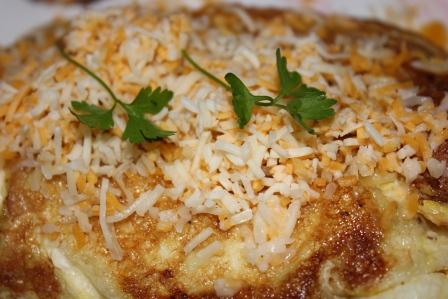
Don’t forget to garnish with some shredded cheese and some of your fresh parsley. One thing I always remember from my 4-H cooking project, the more beautiful the dish, the more appealing to the pallet. Enjoy!

Thankful for what Mother Nature Provides

It is amazing that throughout the growing season we are always hopeful for specifics from Mother Nature. Right now, we are in need of rain. I know this is ironic given the amount we received a few weeks ago, but the 11 1/2 inches of rain came so quickly that the amount that actually soaked in was minimal in comparison to what fell.

As we traveled across the Midwest last week to be with relatives in southern Ohio, we saw crops in dire need of moisture, and we fully recognize that we are in better shape than many in regards to moisture.

A nice rain this week and next would help start the seeds that I planted two weeks ago. I have started watering them so hopefully we will see some germination this weekend.

Sam excited to show us the Zinnias had bloomed.

Keith investigating the first sunflower.

Sam searching for sunflower seeds.

BOXES OF PRODUCE

This list is prepared before we harvest your share. Some guesswork is involved! We do our best to predict which crops will be ready to harvest, but sometimes crops are on the list that are not in the share, and sometimes crops will be in the share even though they’re not on the list.

Look for new links on recipes etc. Also remember food safety when preparing, always wash your before eating. http://bit.ly/MBhskn

Rhubarb – Our last harvest for the season of this delicious treat! See the Almond Rhubarb Cake recipe at the bottom of the post shared by one of our members Sharon VandeWiele.

Simpson Elite Lettuce – Wash, cut off longer stems. Should grow better in warmer weather with better flavor.

Prizehead Lettuce – Wash, cut off longer stems.

Red Oak Leaf Lettuce – Wash, cut off longer stems.

The lettuce growing in the pallet gardens are doing well with minimal weeding needed.

Beets –  We are thinning out the rows so the bulbs have more room to grow, so enjoy these small beautiful red bulbs.

Peas – The pods are edible so enjoy eating them out of the pod or the pod and all.

Green Beans – This is our first harvest out of the garden this year. We will see how long they last in this heat and humidity.

Summer Squash

I use a serrated knife when cutting tomatoes. No smashing the tomato which results in beautiful slices.


Green Tomatoes – some of you mentioned an interest in doing some recipes with green tomatoes. So we have included a few for you to try some recipes. http://www.marthastewart.com/search/apachesolr_search/Green%20tomatoes

Cucumbers – The cucumbers are beginning to grow like crazy! So look forward to more of these delicious veggies.

We have taught Keith how to use the peeler, and he loves helping peel vegetables. Our theory – engaging kids in meal preparation will increase their interest in trying new foods. Above, he is peeling one of the first cucumbers of the season that he found in his garden hunt.

Herbs – Chives, Red  Rubin basil, mint, parsley and golden oregano. Remember you can dry them or you can freeze in an ice-cube to use later.

Last night, I grilled turkey which I drizzled honey over and topped with a few sprigs of orange thyme. When I turned it over, I drizzled it again with honey. After the internal temperature reached 170 degrees Fahrenheit, I served it to my family. Yes, I do use a meat thermometer. It is key in successfully cooking tender, delicious meat.

Fresh cut arrangement – The Zinnias and sunflowers are beginning to flower but only a few. I did include a small arrangement of Zinnias and hosta leaves. I am including some Cattails in your boxes this week for a dried arrangement. I have sprayed with hairspray to prevent them from seeding out. You may also want to spray them to make sure. Once sprayed they will last a long time in your house. If not sprayed, they will seed out quickly and become a mess.

As you look at the south part of the garden there are from left to right, potatoes, onions, tomatoes, more potatoes, salad crops, flowers and strawberry popcorn.

We have used some fences for the vines to grow up. For example as the cucumbers grow up the fence they will hang through the fence. We also put mulch in to help minimize disease, improve vegetable quality and retain moisture for the plants.
The tepees in the far corner Steve built a few years ago for the kids to have a fun place to play as the vines grow around them it makes a fun hide out. On the left is the broom corn and on the right is the ornamental corn.

Almond Rhubarb Coffee Cake

Prep Time: 15 Minutes
Cook Time: 30 Minutes
Ready In: 45 Minutes
Servings: 24

INGREDIENTS:
1 1/2 cups packed brown sugar
2/3 cup vegetable oil
1 egg
1 teaspoon vanilla extract
2 1/2 cups all-purpose flour
1 teaspoon salt
1 teaspoon baking soda
1 cup milk
1 1/2 cups rhubarb, chopped
1/2 cup sliced almonds
1/3 cup white sugar
1 tablespoon butter, melted
1/4 cup sliced almonds

DIRECTIONS:
1. Preheat oven to 350 degrees F (175 degrees C). Grease two 9 inch round pans.
2. In a large bowl, beat brown sugar, oil, egg, and vanilla together until smooth. Combine flour, salt and baking soda; add to sugar mixture alternately with milk. Beat until smooth. Stir in rhubarb and 1/2 cup almonds. Pour into prepared pans.
3. In a small bowl, combine white sugar and butter or margarine. Stir in 1/4 cup almonds. Sprinkle topping over batter.
4. Bake for 30 to 35 minutes, or until the cake tests done.